Ani Ma’amin (“I Believe”)


For centuries, one of the most unusual works of rabbinic literature simply vanished. No one printed it, no one copied it widely, and eventually it disappeared from the Jewish library altogether. When the German-Jewish scholar Leopold Zunz (1794–1886) set out to reconstruct it in 1832, he had never seen the full manuscript – only citations scattered through medieval sources. Yet he managed to recover the text, propose its contents, and identify its organizing principle. He was almost entirely right.
The work was Pesikta de-Rav Kahana, a midrash compiled sometime in the V century, during the period of Byzantine rule over the Land of Israel. Unlike collections such as Bereshit Rabbah or Leviticus Rabbah, it did not follow the order of a biblical book. It followed the Jewish calendar – festivals, special Sabbaths, fast days – laying out the sermons that Jewish preachers delivered to local congregations throughout the year.
A calendar, not a book
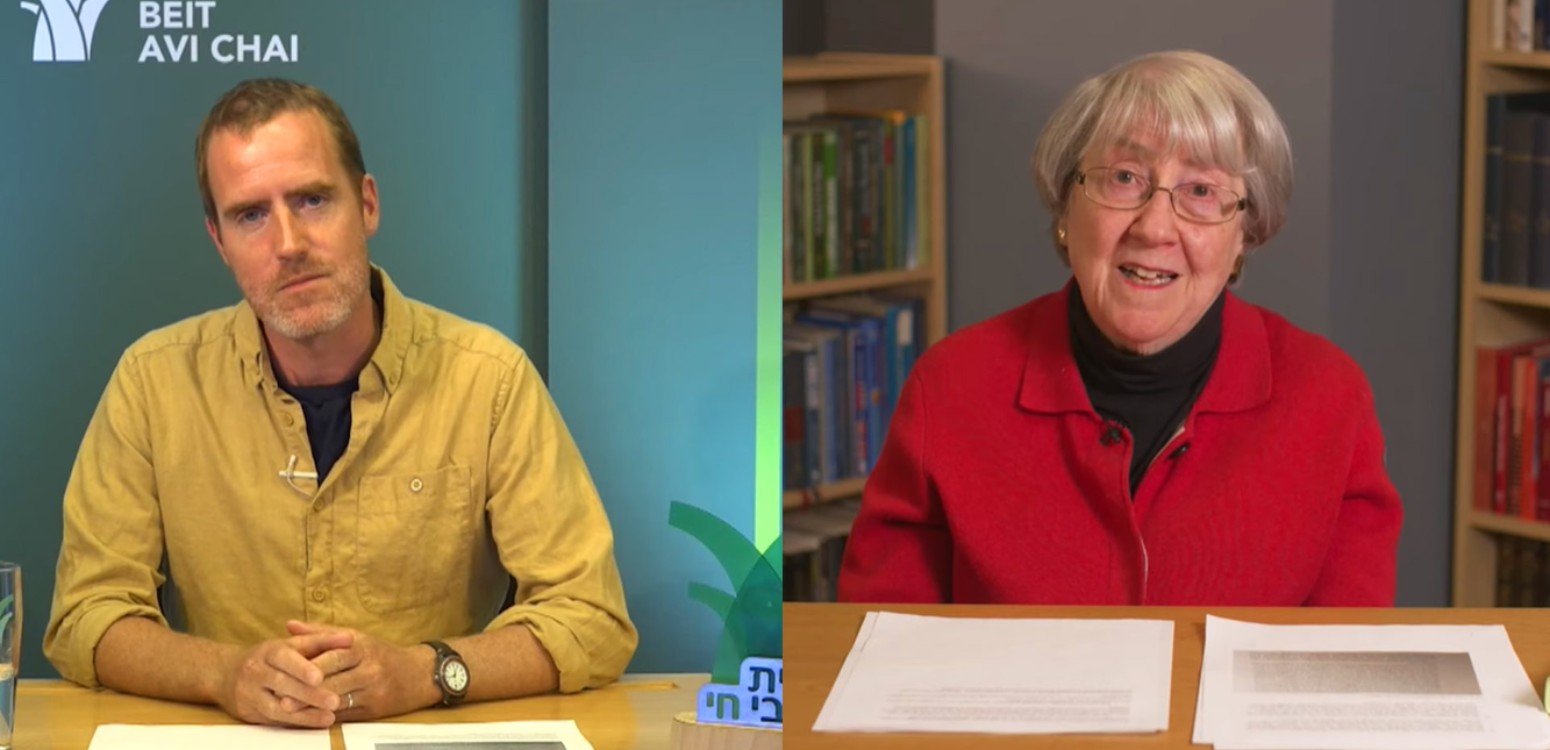
“It’s a unique midrash,” says Prof. Arnon Atzmon, who teaches Midrash and Aggadah in the Department of Talmud at Bar-Ilan University. “It’s not related to a particular biblical book. It has a different organizing principle.” Each chapter corresponds to a specific Torah or prophetic reading tied to a moment in the Jewish year – Chanukah, Pesach, Rosh Hashanah, the fast of Tisha B’Av and its aftermath. Atzmon’s lecture series at Beit Avi Chai, “From the Straits to Consolation: Studies in Pesikta de-Rav Kahana,” follows the midrash through the ten Sabbaths that stitch together the three weeks of mourning before Tisha B’Av and the seven weeks of comfort that follow it. Pesikta de-Rav Kahana is a rabbinic attempt to transform the calendar into a journey – transitioning from calamity to the possibility of repair, from destruction to comfort, offering deep Jewish thought about crisis, memory, hope, and rebuilding.
Lost and found
Why isn’t the Pesikta as well known as Bereshit Rabbah or Vayikra Rabbah, the other great aggadic midrashim of the same era? Partly, Atzmon argues, it’s a matter of bad luck. “The others arrived directly from the Talmudic period from oral literature to written literature and then print,” he explains. “To the best of our knowledge, at first Pesikta was never printed anywhere. For hundreds of years, it was absent from the Jewish library.”
The confusion was compounded by a later work: Pesikta Rabbati, a homiletic midrash that incorporated material from the older Pesikta de-Rav Kahana and was sometimes mistakenly called Pesikta Rabbati de-Rav Kahana. This is partly why the two were confused for centuries after the original disappeared from circulation.
Confirmation of Zunz’s reconstruction came a few decades later. Salomon Buber (1827–1906, grandfather of the philosopher Martin Buber) tracked down actual manuscripts of the Pesikta and published the first full edition in 1868. One, which he located in Tzfat, had originally been copied in Egypt in the XVI century. Buber’s discovery confirmed nearly everything Zunz had surmised, but with one important twist: Zunz had assumed the midrash opened with Rosh Hashanah, but the actual manuscript began with Shabbat Chanukah. A new critical edition followed in 1962, prepared by Bernard Mandelbaum (1922–2001) of the Jewish Theological Seminary in New York, which is now considered the standard scholarly text. “From this point on,” Atzmon says, “it received a lot of attention.”
A window into the ancient synagogue
“Unlike the other midrashim, Pesikta belongs to the synagogue rather than the beit midrash,” Atzmon says, “because it is associated with communal events.” On Shabbat Chanukah, for example, the preacher had a specific job: to connect the distant memory of the Temple’s rededication to the lived experience of the local congregation. “It’s a small window into the real actual practice in ancient synagogues,” Atzmon says, “and how the sages coped in difficult times in an attempt to lift the spirits of the people, in an attempt to speak to them in an intimate language via synagogue liturgy.”
In the V century, communities in the Land of Israel read through the entire Torah using a triennial cycle rather than today’s annual one. Over that three-year cycle, certain Sabbaths were marked out as exceptional – moments when the calendar itself created an opening for the preacher to say something the standard weekly portion would not. “For the sages this was an opportunity to deliver a special ideological or sometimes political message,” Atzmon says. “Sometimes this dealt with controversies with Christianity.”
Responding to Byzantium
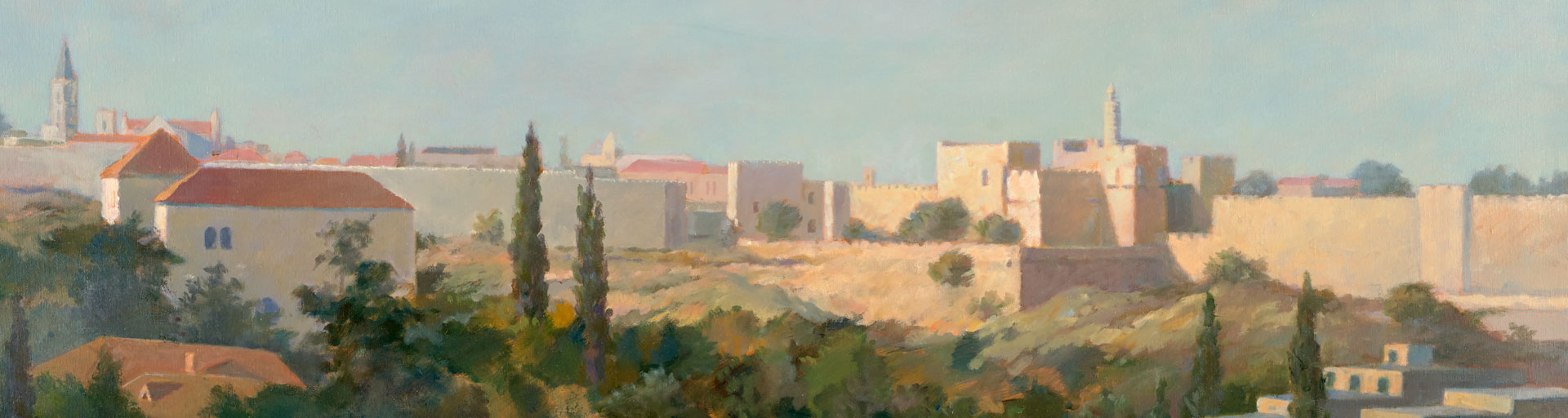
For Atzmon, this last point is crucial. Pesikta took shape, he argues, during the crisis in the V century throughout the Byzantine Empire that had economic, political, and theological ramifications. During the IV and V centuries the empire completed its Christianization, rebuilding a ruined Jerusalem as a monumental Christian city and using that transformation as proof of a new covenant: the true Israel, the claim went, was now the Christian one. The Jewish community needed a coherent response.
Addressing this, Pesikta featured an innovative haftarah cycle: three weeks of admonition drawn from passages of rebuke, followed by seven weeks of consolation drawn from the prophet Isaiah, framing the fast of Tisha B’Av on both sides. “Rav Kahana is the only source for this practice,” Atzmon says. “It took the institution of the haftarah, which was connected to the reading of the Torah, and turned it into a continued story.” According to this reading, the destruction was not a random catastrophe but punishment for failures the people could still correct. “It’s designed to cope with the crisis of the destruction,” Atzmon says, “explaining that it’s all part of a plan.” He describes the ten Sabbaths as “seam days” – suggesting fabric that has been torn and must now be sewn back together, stitch by stitch, until it holds.
How much of the encounter between preacher and congregation can really be recovered from a literary text edited centuries after the fact? Atzmon is honest about the limits. “We have no way today to look inside an ancient synagogue,” he says. Unlike the church, the rabbis “didn’t leave their sermons as is.” Instead, they survive as fragments inside larger compilations, requiring scholars to work backwards from “the seeds that have been left,” separating authentic homiletical material from the hand of later editors. “In Rav Kahana it’s easier to identify that rhetoric,” he says. There are textual patterns that reveal a sermon’s roots, including, in one case that Atzmon has written about at length, a sermon that presents the congregation’s encounter with the festival reading as a literal reenactment of standing at Mount Sinai.
Atzmon’s own book on the subject, “My Children, Read This Passage Every Year,” focuses on the editing of Pesikta – what its compiler chose to include, exclude, and juxtapose, and what that editorial hand reveals that a single passage cannot. This work continues. With only a handful of manuscripts surviving, distinguishing the original text from later accretion remains unresolved. “If I could use AI or some kind of deep learning,” Atzmon says, “I would ask it to help analyze all the different manuscripts – what’s the original, what’s changed, and why. We’re trying to do that work now.” It is a fitting ambition for a text whose own history is one of being lost, discovered, and reconstructed.
Main Photo: AI