In 1965, an American rabbi from Warsaw marched in Selma alongside Martin Luther King Jr. Afterwards, he famously declared, “I felt my legs were praying.” This image – of prayer embodied in a civil rights march – captures something important about Abraham Joshua Heschel. But for decades, despite his enormous influence as one of the leading XX century theologians and philosophers in the English-speaking Jewish world, Heschel, a professor of Jewish mysticism at the Jewish Theological Seminary of America, remained a marginal figure in Israel.
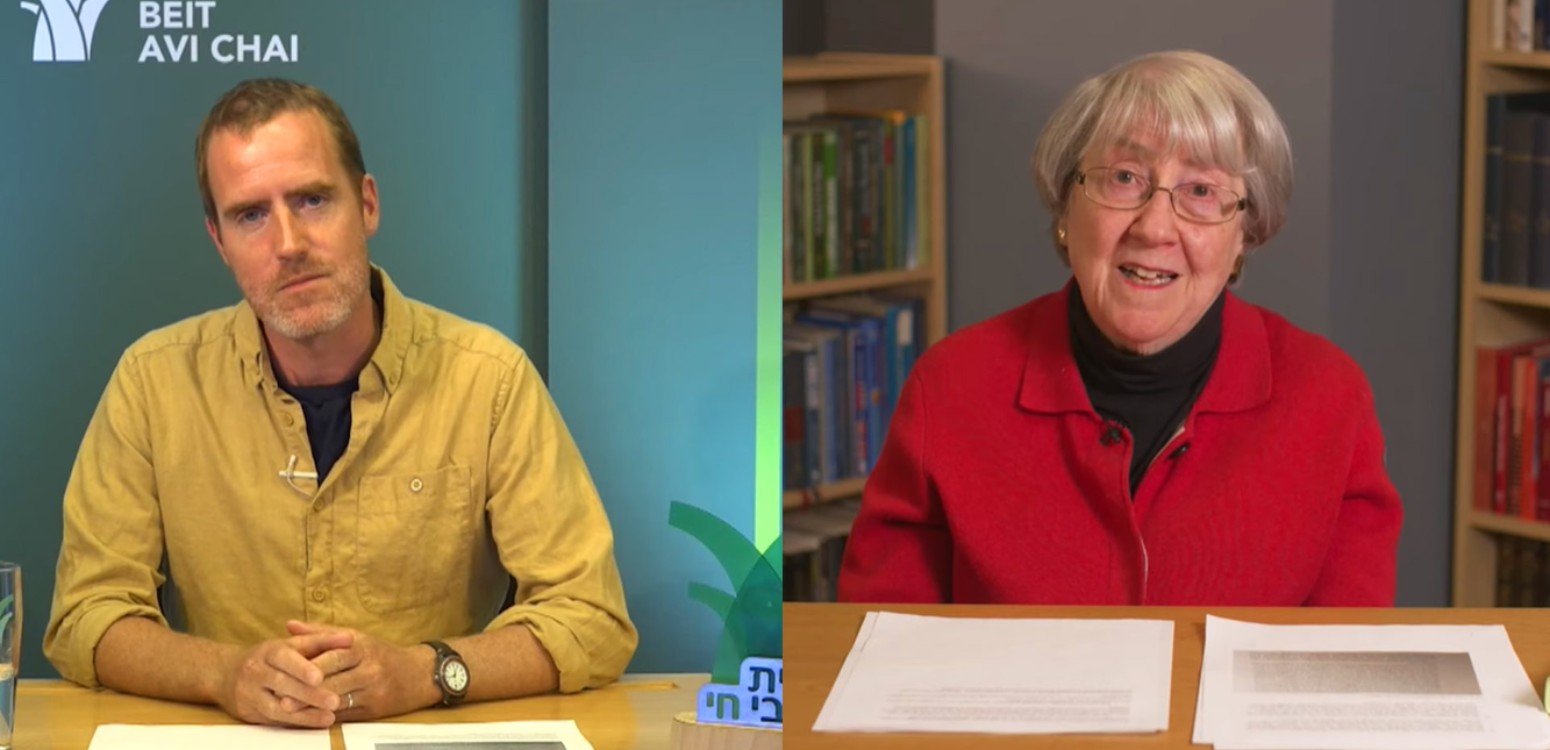
This has begun to change. A new series at Beit Avi Chai, “God Believes in Humankind: An Introduction to the Thought of Abraham Joshua Heschel and its Social Implications,” aims to introduce Heschel as a thinker whose ideas about God, humanity, and social responsibility have something urgent to say to Israelis wrestling with what their society is and what it should become. The series is led by Dr. Dror Bondi, who has spent two decades translating, publishing, and lecturing on Heschel in Israel (recently publishing a Hebrew translation of Heschel’s “The Prophets”), and has just completed his first year as the Corcoran Visiting Professor at Boston College.
God is looking for us
Bondi’s own path to Heschel was a fascinating one. “At first I wasn’t drawn to him,” he recalls. He was working as an insurance agent when he enrolled in a master’s program at Bar Ilan University. A seminar by Prof. Ephraim Meir comparing Martin Buber and Heschel left him cold on the latter, but then his professor rejected his Buber paper and redirected him. “I had studied many years in Hesder Yeshivas,” Bondi explains. “I thought I understood Judaism and Israeliness well.” Heschel changed that. “It was like looking at a familiar map from a new angle. I thought my Judaism and Israeliness were in conflict. Suddenly I discovered a completely new type of Judaism.”
To understand why Heschel was slow to take root in Israel, Bondi argues, you need to understand the God most Israelis carry in their heads. “Most Israelis agree that God is a man, old, right-wing, and Orthodox,” he says, half-joking. “The issue is whether such a god exists or not.” Both the religious right and secular left share this image, even as they disagree about his reality. Heschel’s God is something else entirely.
For Heschel, the God of the Bible is not waiting to be found. He is a God who genuinely cares about what happens in the world. Bondi describes two surprises built into this theology. The first is that God is in search of us, that the encounter between the human and the divine is not a one-sided effort but a meeting. “Unlike the Breslavers, who yearn for God,” Bondi explains, “and unlike Maimonides, for whom God is very distant – here there is a third possibility: God cares so much about humanity that he takes the first step.”
The second surprise follows from the first. If God cares so deeply about humanity as to go looking for us, then God is the parent of all human beings – not the tribal deity of one people, not the patron of one tradition, but the source of solidarity that encompasses everyone. “This God is like the parent of all humanity,” Bondi explains, “a total opponent of racism and the most important source of peace.” From this single premise – God believes in humankind – Heschel derives his whole social ethics: the insistence on civil rights, his opposition to the Vietnam War, the commitment to interfaith dialogue, the conviction that every human being is made in the image of God.
“Radical amazement”
Underlying all these ideas is what Heschel calls “radical amazement.” Classic Western philosophy, from Descartes onwards, anchors itself in the certainty of the thinking subject: “I think, therefore I am.” Heschel proposes a different starting point. “Judaism begins with thanks for existence,” Bondi explains. “Not ‘I think therefore I am’ but ‘Wow, I exist! It exists!” Bondi suggests that radical amazement is one of the points at which Heschel and the Hasidic tradition he came from are most visibly in conversation.
This, for Heschel, is also what prayer is. “When you pray, you are opening yourself up to God’s point of view, how much God loves the world and humanity,” Bondi explains. “When you feel that, you go to a march for human rights. And vice versa.” Prayer and protest are not alternatives but expressions of the same underlying movement: the “leap of action” that Heschel identifies as the Jewish alternative to Kierkegaard’s Leap of Faith – the idea that belief requires a conscious, individual act of will. Bondi makes a familial analogy: when you love your siblings, it makes your parents happy. This is what Heschel meant when he said his legs were praying in Selma. He was not speaking metaphorically.
Genuine Jewishness demands democracy
Heschel’s relationship with the State of Israel was complex. He came on his first visit in 1957, and his impressions were mixed. He had long worried that Zionism’s reduction of Jewish identity to national and ethnic categories impoverished something larger. “Israel is a holy word that’s much higher than a nation state,” Bondi explains, paraphrasing Heschel’s position. The meaning of being Jewish, for Heschel, was inseparable from commitment to a God who cared about all people – and a purely national definition of Jewish identity seemed to him to shrink that commitment to the point of disappearance. Yet the 1957 visit moved him: he recognized that Israel had created a real solidarity among Jews. After 1967, he harbored a hope – later revised – that the return to Jerusalem might catalyse a spiritual transformation in Israel and open a new chapter in the interfaith dialogue he was actively pursuing with the Vatican, now extended to include relations between Jews and Muslims. He died in December 1972, months after concluding that he had been too optimistic.
It is this dimension of Heschel’s thought that Bondi believes speaks most directly to Israel’s current situation. The unresolved tension between “Jewish” and “democratic” in Israel’s self-definition has impacted the country for decades. “Zionism taught us that Judaism is first and foremost national, an ethnic phenomenon,” he explains. “This is why the state was born without a constitution. For Heschel, Judaism is first and foremost a spiritual-moral perspective and demand. Judaism requires a constitution. It requires a constitution of equality.” A Jewish state, in this reading, is not simply a state where most of the citizens are Jewish. It is a state that embodies Jewish values – among them, the equal dignity of every human being created in the divine image, as well as an inner Jewish solidarity. Viewed through this lens, the tension between Jewish and democratic values dissolves: genuine Jewishness demands democracy.
Discovering Heschel in Israel
Why did it take so long for Heschel’s thought to “make aliyah”? Bondi recalls something that was written many years ago in Ha’aretz: there is no reason to bring Heschel to Israel, because he believes in a completely different God to the God of Israelis. The religious right had no use for a God of universal pathos; the secular left had no use for God at all. But something has changed in recent years. Both religious and secular Israelis are now searching for alternatives to the existing paradigms – and finding Heschel waiting for them. “Thousands of people are reading about Heschel,” Bondi notes. “He’s being published commercially and not just academically – and people are buying, reading and reacting.” Perhaps, as Bondi suggests, it is in Heschel’s ideas that Israel may yet find the key to its oldest argument about itself.
For more, see Dr. Dror Bondi’s online series at BAC, “God Believes in Humankind: An Introduction to the Thought of Abraham Joshua Heschel and Its Social Implications” (in Hebrew).
Main Photo: Abraham Joshua Heschel, 1964\ Wikipedia
Model.Data.ShopItem : 0
11