OldContentID: 0
OldRefID: 0
When modern scholarship began to treat the Bible as a document written by humans, Orthodox rabbis fought back – not by rejecting critical thinking, but by mastering it
The XIX century posed a significant challenge to rabbis across the Jewish world, particularly in Western Europe. The emergence of modern scientific approaches to Scripture, associated with the scholarly movement commonly referred to as biblical criticism, presented the biblical text as a human product marked by inconsistencies and historical development, rather than as wholly divine and infallible. Orthodox rabbis, for whom these texts remained sacred, were thus required to navigate a complex intellectual and theological tension.
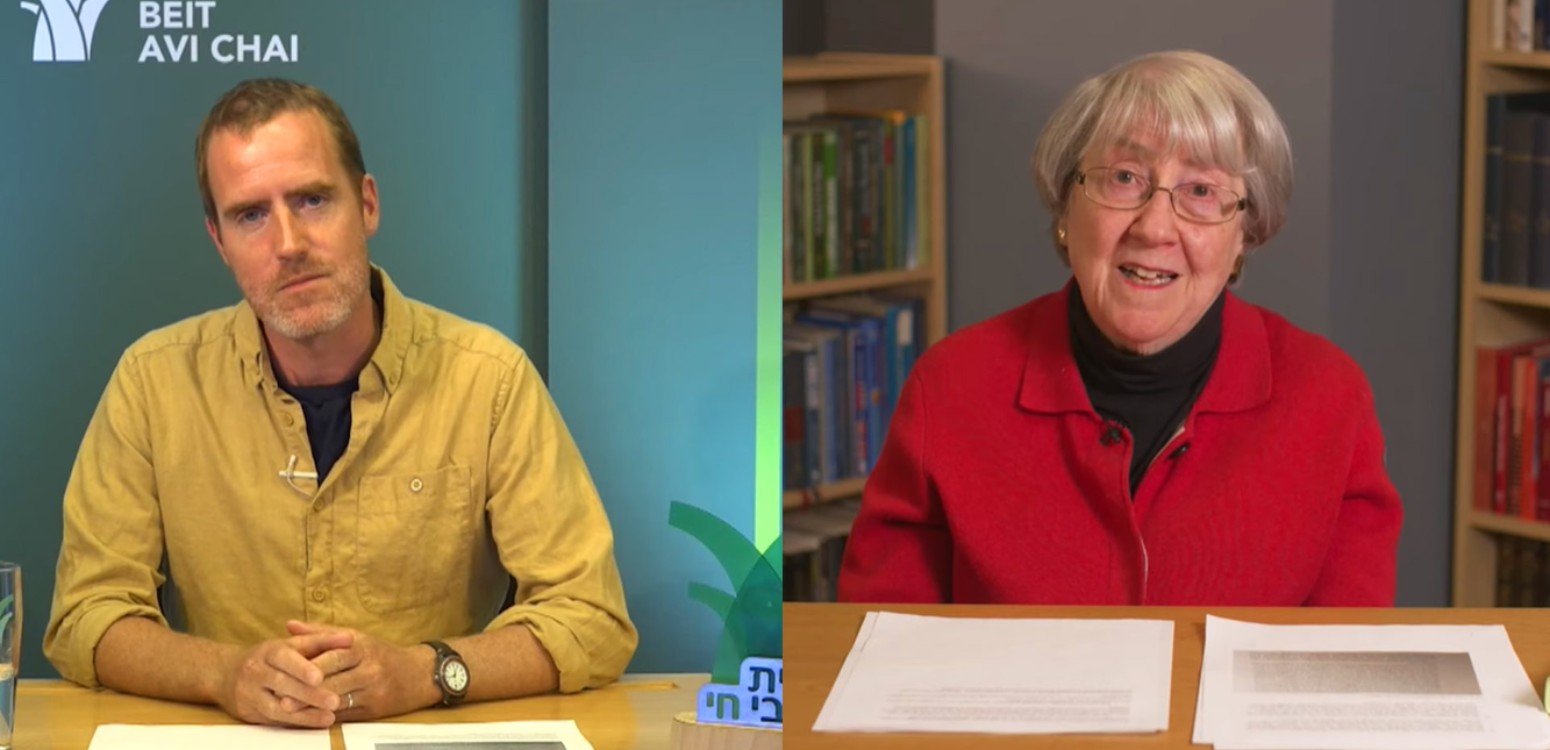
“I prefer ‘critical thinking about the Bible’ to the term ‘biblical criticism,’” says Prof. Tova Ganzel of Bar-Ilan University’s Multidisciplinary Department of Jewish Studies, who led a five-part lecture series at Beit Avi Chai dedicated to XIX century Jewish thinkers who grappled with the emergence of Jewish Studies as an academic field. She emphasizes that biblical texts increasingly came to be read within broader social and historical contexts. By the XIX century, advances in philology, archaeology, and related fields had opened up new ways of reading the biblical text. A purely traditional approach, on its own, was no longer enough.
Voices of a new era
The lecture series focused on four central figures – Samuel David Luzzatto (Shadal), Samson Raphael Hirsch, Elia Benamozegh, and Meir Leibush ben Yehiel Michel (Malbim) – all of whom were influential rabbinic thinkers who addressed both learned and broader audiences. Their letters and commentaries served as a form of public intellectual engagement. As religious leaders, they understood the implications of modern scholarly discourse and felt a responsibility to help their communities navigate it – offering them ways of reading Scripture that could hold up in a changing intellectual world.
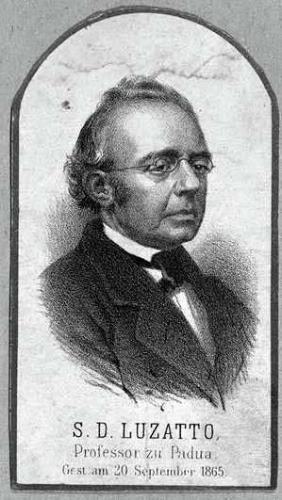
Samuel David Luzzatto, from an 1865 engraving\ Wikipedia
In this sense, modernity did not entail a rejection of tradition, but rather its reinterpretation within new historical conditions. Biblical commentary has a long history – Rashi was writing in the XI century – but the XIX century brought a renewed intensity to the practice. The expansion of print culture facilitated the wider dissemination of ideas and enabled rabbinic figures to communicate more effectively with diverse audiences. “This period may be understood as a moment of significant pedagogical and intellectual investment in biblical interpretation,” says Prof. Ganzel.
Hirsch’s balancing act
While students in yeshivot were often familiar with emerging critical approaches, these ideas required mediation for a broader lay audience. Samson Raphael Hirsch (1808-1888), for example, who received academic training in Bonn, was well acquainted with contemporary scholarly interpretations of the Bible and engaged with them directly. At the same time, he addressed readers whose exposure to such methods was limited. As an Orthodox thinker, he navigated a careful balance, employing nuanced rhetorical strategies to reconcile critical awareness with theological commitment.
One illustrative case concerns the authorship of Deuteronomy. While traditional views attribute the text to Moses, the frequent third-person references to him raise interpretive questions. Rather than adopting critical conclusions, Hirsch offered an alternative explanation, suggesting that the stylistic choice served literary and pedagogical purposes within the text itself.
The shadow of Spinoza
The challenge these thinkers faced can be traced back at least to Baruch Spinoza (1632–1677), often regarded as a precursor to modern biblical criticism. In his “Theologico-Political Treatise” (1670), he identified textual inconsistencies and raised questions regarding authorship and composition. However, his conclusions diverged sharply from those of XIX century Orthodox thinkers. Whereas Spinoza argued against the divine origin of the text, these later figures sought to preserve its sanctity while addressing the challenges posed by critical inquiry.
These commentators were also deeply engaged with contemporary philosophical discourse. Elia Benamozegh (1823–1900), an Italian Sephardic Orthodox rabbi and Kabbalist, was above all a philosophical thinker, devoting sustained attention to fundamental questions such as human freedom and the parameters of ethical behavior.
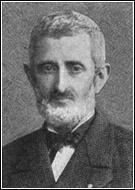
Elijah Benamozegh\ Wikipedia
The lecture series emerged from a broader question concerning the divergence between traditional religious study and academic biblical studies. Ganzel observes that, while these domains were once perceived as distinct, they are increasingly intertwined. “Even within Orthodox educational settings, elements of academic methodology are evident, both in formal features such as citation practices and in substantive engagement with critical questions,” she says.
Intense intellectual engagement
What united all four thinkers, perhaps, was the intensity of their intellectual engagement – not just with Scripture, but with the broader world of ideas surrounding them. It is this quality that animates Ganzel’s own fascination with the period. “I just wish I could visit their libraries,” she says, “and see what they were reading – what they returned to, what they questioned, and how these encounters shaped their intellectual and religious world.”
For more, see Prof. Tova Ganzel’s online series at BAC, “Confronting biblical criticism among Torah commentators in the XIX century” (in Hebrew).
Main Photo: Rabbi Samson Raphael Hirsch\ Wikipedia
Model.Data.ShopItem : 0
11