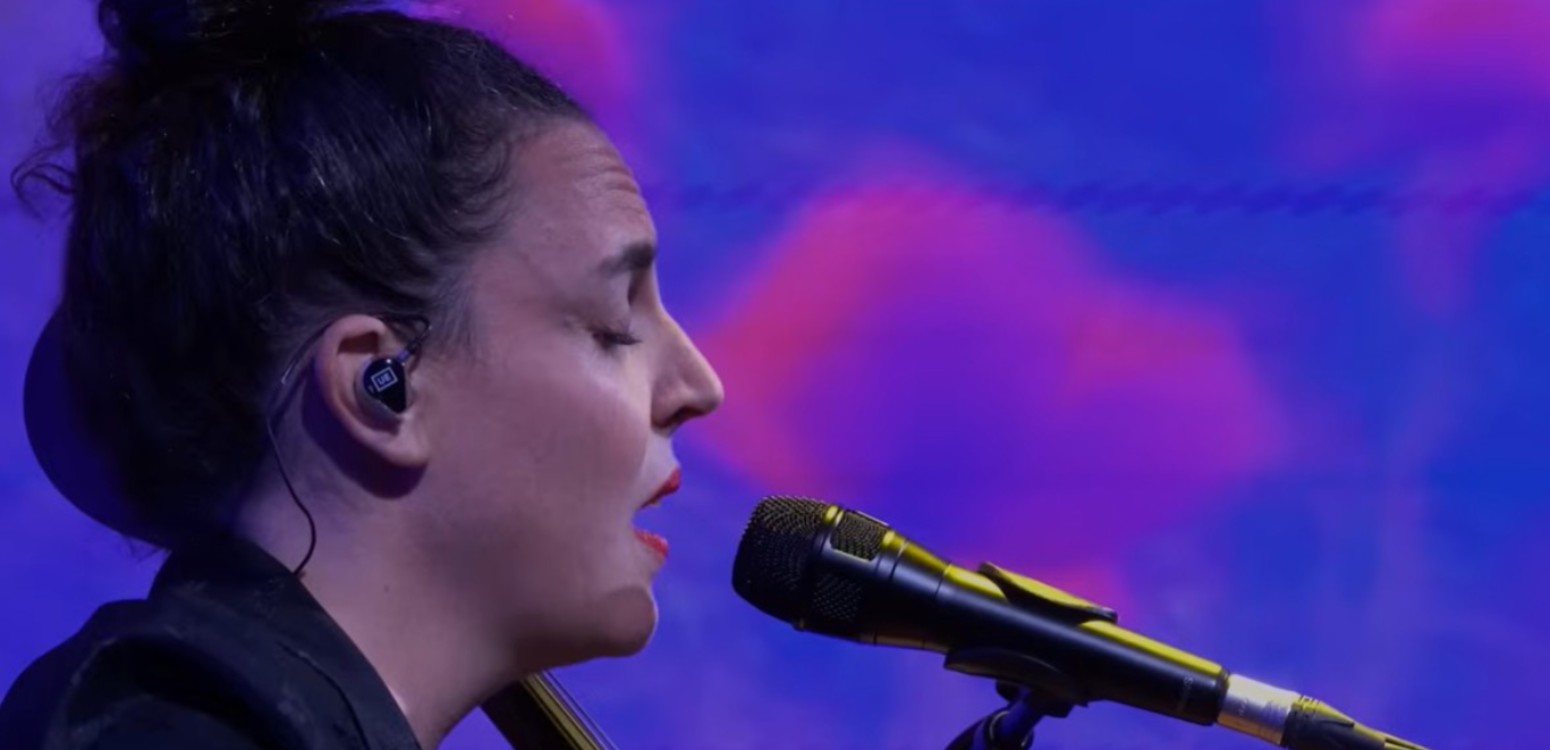
Ani Ma’amin (“I Believe”)

It happened about a decade ago. I was at a circumcision ceremony when I suddenly felt alienation and revulsion. The crowd loudly reciting “The Lord is King, the Lord was King, the Lord shall be King forever and ever”; an eight-day-old baby being carried toward the blade; the screams of that tiny child lifted into the air to cheers – all of this stirred complex feelings in me. I whispered to my friend Tehila Friedman that more and more people are wrestling with whether to circumcise their sons at all.
Friedman – a lawyer, politician, and former Knesset member – was surprised and visibly saddened. Afterward, she wrote a beautiful Facebook post sharing that she knew the emotional difficulty of circumcision well, having felt it herself as a mother. Yet during each of her sons’ brit milah, she felt she was “giving him the ultimate gift. The identity that precedes choice. The sense of belonging to something greater than himself. An anchor in the world. To be Jewish. To be part of a great story that existed before him and will continue after him, and that can give meaning to his life if he chooses. A covenant sealed in flesh.”
The command
The commandment appears in this week’s Torah portion: “The Lord spoke to Moses, saying: Speak to the Israelite people thus: When a woman at childbirth bears a male, she shall be impure seven days... On the eighth day the flesh of his foreskin shall be circumcised.” (Leviticus 12:1-3)
This isn’t the first time. In Genesis, God makes a covenant with ninety-nine-year-old Abraham, promising he will be “the father of a multitude of nations”: “Such shall be the covenant between Me and you and your offspring to follow that you shall keep: every male among you shall be circumcised. You shall circumcise the flesh of your foreskin, and that shall be the sign of the covenant between Me and you. And throughout the generations, every male among you shall be circumcised at the age of eight days.” And as if that weren’t enough: “Thus shall My covenant be marked in your flesh as an everlasting pact. And if any male who is uncircumcised fails to circumcise the flesh of his foreskin, that person shall be cut off from kin; he has broken My covenant.” (Genesis 17:10-13)
The debate
Circumcision is one of Judaism’s most powerful rituals. Between ninety and ninety-seven percent of Jewish couples in Israel circumcise their sons. Yet in recent decades, organizations actively opposing infant circumcision have emerged, along with critical articles and books.
The central arguments against circumcision are as follows. First, babies have the right to bodily integrity – inflicting permanent alteration on an eight-day-old is a violation of a fundamental right. Second, the ritual creates different attitude toward boys and girls from birth, culturally privileging boys. Third, this is an unnecessary surgical procedure that violates basic medical ethics. Fourth, it causes significant pain to an infant, which is cruel. Finally, the foreskin protects the glans and contains sensory nerve endings – its removal may reduce sexual sensitivity later in life.
Medical arguments exist in favor as well. Some studies show circumcised infants suffer fewer urinary tract infections in their first year, and that penile cancer rates are up to five times lower among circumcised men. Lower rates of sexually transmitted infections have also been recorded.
Yet the primary consideration driving Jewish Israelis seems cultural and religious. As Tehila wrote, circumcision is a symbolic act, making the child, moments after birth, part of something. He didn’t arrive from nowhere; though just born, he already has a history and identity; he is part of a story. That is at the heart of the matter.
Maybe the question is how
So which arguments do you identify with? Perhaps the question isn’t whether to circumcise, but how. We chose to circumcise our sons with a physician who is also a mohel, and with prior anesthesia, which significantly reduces pain. In light of this week’s Torah portion, I felt it important to raise this discussion – though naturally, we can only go so far here.
Lior Tal Sadeh is an educator, writer, and author of “What Is Above, What Is Below” (Carmel, 2022). He hosts the daily “Source of Inspiration” podcast, produced by Beit Avi Chai.
For more insights into Parashat Tazria-Metzora, listen to “Source of Inspiration”.
Translation of most Hebrew texts sourced from Sefaria.org
Main Photo: Seudat Mitzvah at a brit (1824 Czechia)\ Columbia University Library\ Wikipedia