Ani Ma’amin (“I Believe”)


In these days of war and crisis, we need worthy leadership more than ever. Yet the best leaders are often the most reluctant, while those who pursue power relentlessly may be the least deserving of it. This ancient paradox appears at the very opening of the Book of Leviticus.
“And the Lord called to Moses and spoke to him from the Tent of Meeting, saying” (Leviticus 1:1). Why was it necessary to call Moses at all? So many times the text simply reads: “And the Lord spoke to Moses, saying.”
The paradox of power
Midrash Aggadah Buber explains this by invoking the wisdom of Proverbs: pride leads to humiliation, while humility brings honor. The midrash teaches that those who pursue power find it eludes them, while those who avoid it discover that it seeks them out. Moses had to be called because he was trying to keep his distance from any position of power and leadership.
To illustrate this principle, the midrash points to Saul, who fled from power, and Abimelech, who pursued it – and from whom it ultimately fled. This brings to mind Jotham’s parable from the Book of Judges. Trees seeking to anoint a king offered the crown first to the olive tree, then the fig tree, then the vine – all refused, unwilling to bear the burden of kingship. Left with no choice, the trees finally turned to the bramble, the lesser option. Ever since, the danger persists that precisely those least worthy will end up ruling, and fire may start from the bramble and consume the cedars of Lebanon.
Moses’s withdrawals
Our midrash traces Moses’ pattern of fleeing from power. From his first encounter with God at the Burning Bush, he resisted. For seven days, God tried to persuade him to take on the role. Eventually Moses relented and went to Pharaoh, demanding: “Let my people go.” But Pharaoh did not acknowledge his God.
After Pharaoh’s rejection, Moses declared he had done his part and withdrew – stepping back from his mission. Yet he proved himself worthy by leading Israel through the Exodus, parting the sea, sustaining them in the wilderness with manna and water and quail, and overseeing the Tabernacle’s construction. Once the Tabernacle was complete, Moses again tried to disengage, asking what more could be required of him. It was then that God called to him once more.
What do I care?
The moment Pharaoh failed to recognize the God of Israel, Moses wanted to abandon his mission: “What do I care? I have already fulfilled my mission!” This sounds less like flight from power and more like escape from responsibility, from caring. A fine line separates the two.
The midrashist is touching on an internal moment that can overcome anyone who takes on a public task out of calling – a tempting, dangerous instant of “what do I care?” Yet that very moment reveals that Moses is not seeking power or honor. Sometimes on the road toward worthy leadership, one must first pass through unwillingness to lead. This is when the olive tree needs to be coaxed into accepting the crown, rather than going straight to the bramble.
God does not let Moses off the hook. He leads the children of Israel through every stage to the building of the Tabernacle, whose construction, according to tradition, was finished on this very day, the first of Nisan. When Moses thinks he can finally step aside, God calls again: “And the Lord called to Moses.”
Our responsibility
But we must be honest: in the reality of our lives, power often does not chase those who flee from it – at least not on its own. The midrash’s ideal requires active intervention. In practice, fleeing from power opens the door for the bramble to reign. Democracy has evolved into a
system where anyone who does not market themselves, who does not do everything possible to get elected, simply remains on the outside.
And so the duty of “And the Lord called” falls on us. We must become the voice that calls. We must find those most worthy of leadership and call out to them – and not take no for an answer.
Yet the principle of calling extends beyond national politics. In everyday life – especially in these days of war and hardship – each of us also faces our own callings. Every person encounters individual, familial, and communal moments when they must hear the call to take on responsibility, and even to lead. Just as we must call worthy leaders forward, we must learn to hear when we ourselves are being called. As Viktor Frankl (1905–1997) taught us, life calls out to all of us, poses questions, and expects action. The question is whether we can lend it our ear. Like a parent who hears their young child calling from the crib in the middle of the night, we must hear life’s call each and every day, and strive to answer it with humility.
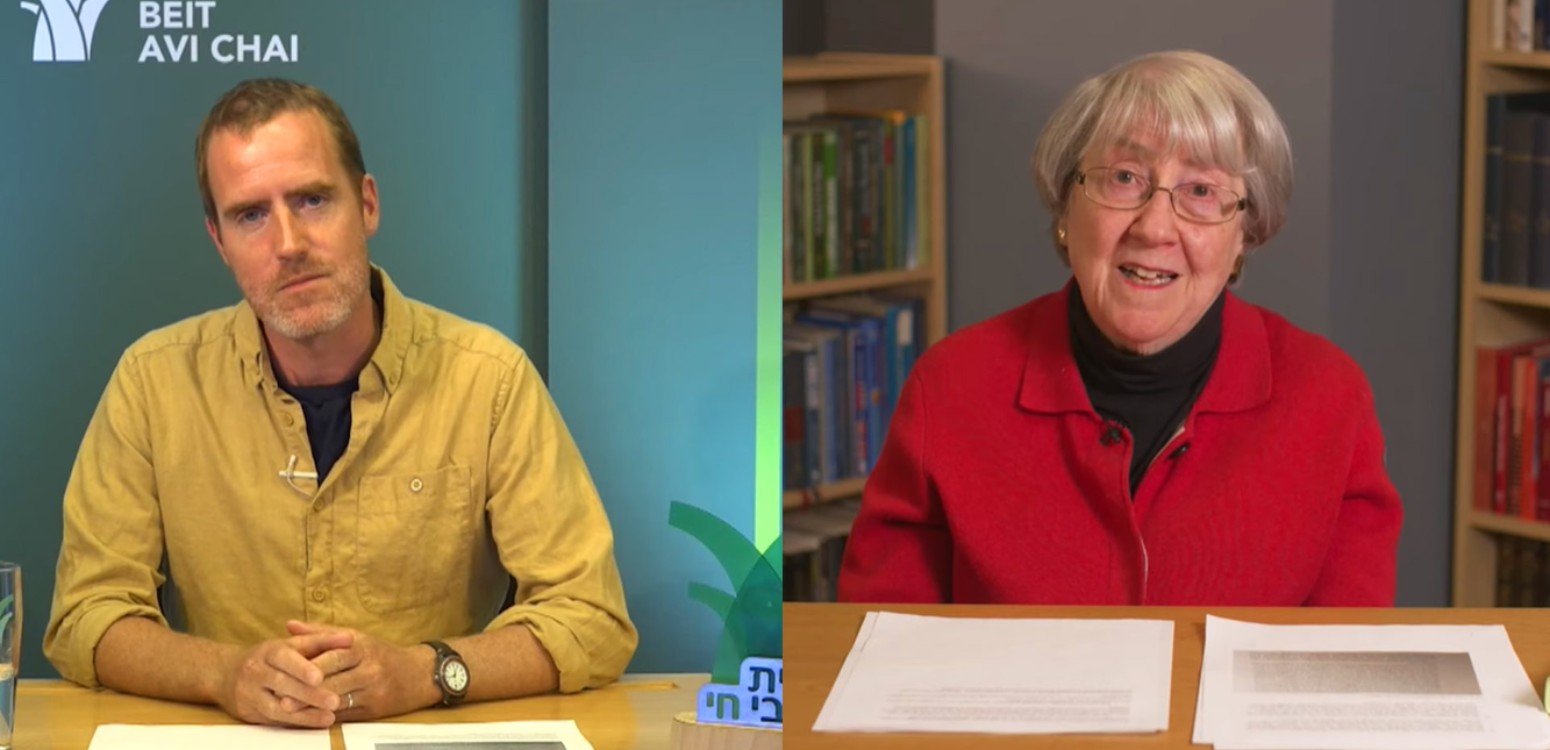
Lior Tal Sadeh is an educator, writer, and author of “What Is Above, What Is Below” (Carmel, 2022). He hosts the daily “Source of Inspiration” podcast, produced by Beit Avi Chai.
For more insights into Parashat Vayikra, listen to “Source of Inspiration”.
Translation of most Hebrew texts sourced from Sefaria.org
Main Photo:The Tabernacle, illustration from the 1890 Holman Bible\ Wikipedia