OldContentID: 0
OldRefID: 0
Religion, science, and the myth of the struggle between them – a conversation with Prof. Yemima Ben-Menahem
When I went “off the Derech” and started studying philosophy, I remember the disappointment – almost betrayal – I felt when I realized that Descartes (1596–1650) believed in God and that he did intellectual gymnastics to prove His existence. The more I studied the beginnings of modern philosophy, the more I discovered how Christian it is and how some of the most important arguments of the great philosophers are rooted in the unshakeable faith in God’s existence. From my perspective, this was a failure, because after all, part of the starting point of inquiry, as Descartes himself claimed, is clearing away all basic assumptions and preconceived beliefs for the purpose of rediscovering “pure” truth. Apparently, there was much I wasn’t aware of. Luckily, I had the privilege to be a student of Prof. Yemima Ben-Menahem, recipient of the 2022 Israel Prize.
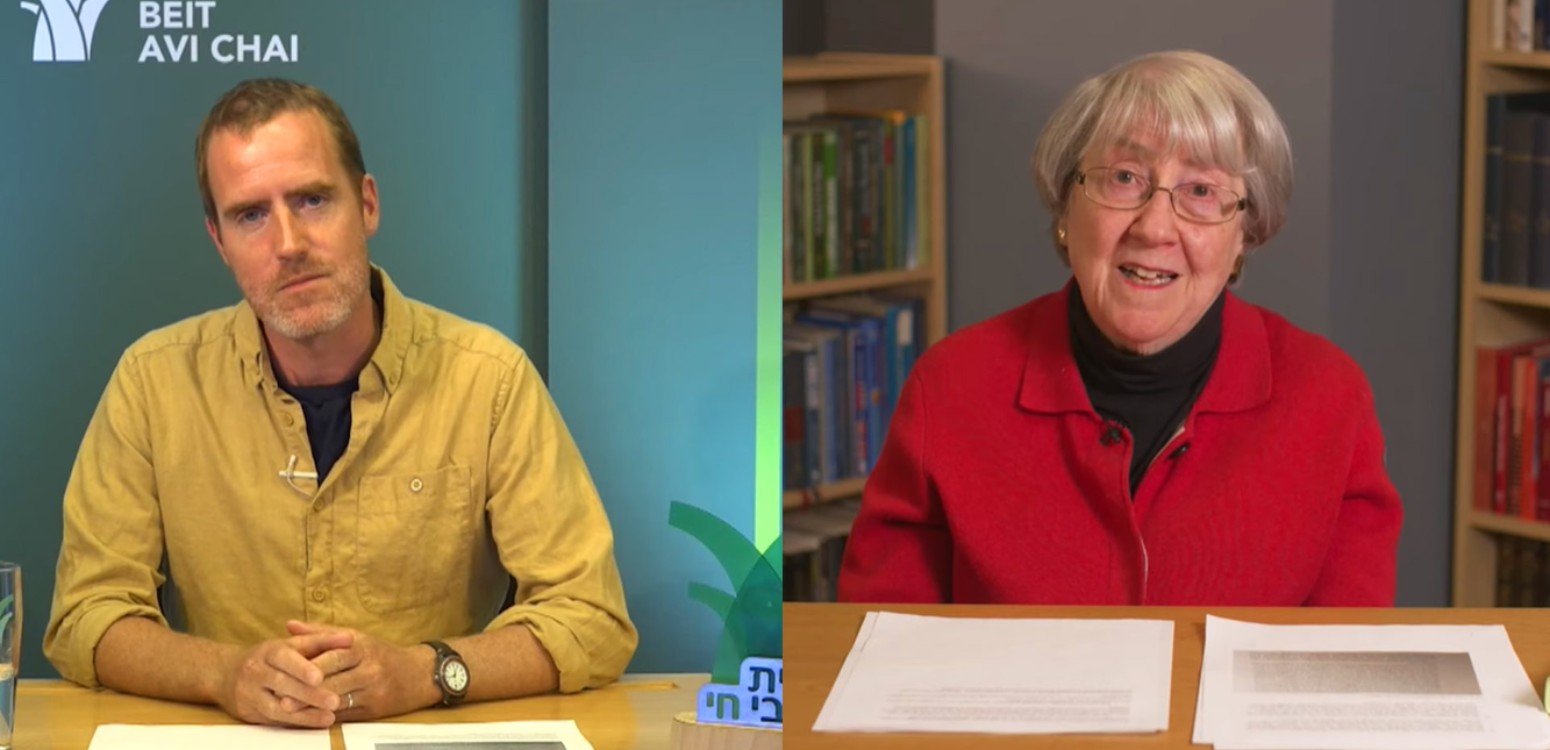
The foundations of modern science, as we know it today, were laid in the XVII century, during the Scientific Revolution. The common claim regarding this development is that science grew out of conflict with religion and the religious establishment, symbolized by Galileo’s (1564–1642) trial. However, in reality, the leaders of the Scientific Revolution were mostly believers who saw religion and science as complementary. Nevertheless, the tensions between the two fields exist and deserve our attention. Jewish thinkers also contemplated the relationship between understanding the world and knowing God, and the questions that troubled them occupy many to this day. This connection, between religion and science, is the subject of a lecture series Prof. Yemima Ben-Menahem recently gave at BAC.
.jpg)
Yemima Ben-Menahem lecture By oria greenbrg\ Wikipedia
Descartes’s blind spots
Descartes presented us with an impossible demand – clearing consciousness of all prior beliefs and rebuilding the entire belief system anew on solid foundations. In her series, Prof. Ben-Menahem dealt with criticism of this position. Among other things, she discussed the position according to which there is room for concrete and reasoned doubt, but not for total doubt. “Furthermore, there is room for suspicion toward forced doubt, whose entire purpose is actually to re-establish the beliefs we supposedly cast doubt upon,” she told me when we further discussed the topic. “We all have blind spots and assumptions we cannot justify, and often we are not even aware of them. It’s better to deal with a concrete question rather than with all knowledge. In any case, we should not err in the illusion that we can be immune from all error. The possibility of error is essential to scientific thinking.”
How do we even separate between science and religion, if in both cases one of the primary motivations is to explain the world, its laws, and the way it functions and can be acted upon? Is this a categorical difference? If so, what is that difference?
“Science relies on a method that requires scientific theories to stand up to empirical testing. A test can be passed or failed, hence science must acknowledge the possibility of error. In this it resembles the field of law, but differs from other cultural domains, such as art and religion. From this perspective, science and religious faith can proceed in parallel channels without collision, as indeed happened in certain periods. The question of contradiction between different fields of thought is a difficult question. The Catholic Church embraced Aristotle, even though ostensibly, the contradiction between his philosophy and the Church’s dogmas is clear.
The question of contradiction between religious faith and science depends, of course, on the nature of religious faith. Are we talking about a personal and providential God or an abstract God? The God of Abraham or the God of Spinoza? And furthermore: Does religious faith obligate us to believe in any assumptions regarding the world? In miracles? In the biblical creation story? Does God’s knowledge negate free will, and is such freedom essential to religion?”
Since most scientists throughout human history were religious – pagans, Christians, Muslims, or Jews – and since all the beginnings of science are rooted in a religious world, how did this perception even come about that science and religion are two opposing forces? When was the rift between religion and science created?
“One can certainly understand and appreciate the science created during the Scientific Revolution (in the XVII century) as pure science, that is, understand and appreciate it independently of the beliefs of its creators. Nevertheless, the question of how it happened that the leaders of the Scientific Revolution were mostly believers is an interesting question. One must remember that even the more general question about the reasons that led to the Scientific Revolution has not received a good answer; there is no single explanation of why the Scientific Revolution occurred specifically in the particular place and at the particular time in which it happened. Many hypotheses have been raised that try to explain this important historical event, but the multiplicity of hypotheses indicates that no single hypothesis is completely satisfactory. And to your question about why the creators of the new science were believers, I can perhaps contribute a hypothesis of my own: conceptually, the idea of natural law is the core of the Scientific Revolution. This concept is comprehensible when there is a creator-legislator who established the laws according to which nature operates. In the absence of a legislator, it is difficult to understand the concept of law. And indeed, in our secular age, many philosophers struggle greatly with the question of the existence of natural laws, and some even deny their existence.
As I said, the contradiction between religion and science is not necessary, as evidenced by leading scientists like Newton (1643–1727), who was a believer with every fiber of his being. He was very careful about scientific method and saw no conflict between his work as a scientist and his faith. On the contrary, he saw his scientific discoveries as a kind of religious mission. Nevertheless, some of the new discoveries aroused concern of the religious establishment, and not only for theological reasons but also for social reasons. Following the Enlightenment, as secular worldview spread throughout Europe, the perception also spread that there is no need for belief in God to explain the world; science does not need this hypothesis, as Laplace (1749–1827) said. In the XIX century, Darwin’s (1809–1882) theory deepened the conflict that accompanies us to this day. On the one hand, many scientists reject the possibility of integrating science and faith. On the other hand, there are scientists who think that the structure of the world testifies to the existence of a designing creator.”
For more, see Prof. Yemima Ben-Menahem’s series at BAC, “The Relationship Between Religion and Science: Studies in Scientific Thinking and Jewish Thought” (in Hebrew).
This article was originally published in Hebrew.
Main Photo: Portrait of the French philosopher and mathematician René Descartes (1596-1650)\ Wikipedia
Model.Data.ShopItem : 0
8